Teams
Team identity panels for roster-literate fans
Podium reads organizations as systems: roles, travel load, practice habits, and promotion paths. No fabricated starting fives.
18+ · Entertainment only · No outcome guarantees · Confirm local rules before you play.

Identity panels that actually help
Identity is not a colorway. It is a repeatable decision pattern under stress. When an org swaps three roles at once, treat the next month as a lab, not a title window.
Who speaks on timeouts and who executes silent defaults?
Pairs that scrim together create gravity wells for the third piece.
Local ranked culture leaks into pro defaults more than fans admit.
Roster-change impact matrix
Detail from the Podium desk.
| Change type | Short-term risk | What to watch | Confidence tip |
|---|---|---|---|
| Single role swap | Utility line gaps | Default consistency | Medium until 2 LANs |
| IGL change | Call speed | Timeout quality | High impact |
| Superteam stack | Ego collisions | Minutes share | Narrative ≠ system |
| Academy call-up | Experience gap | Stage nerves | Track LAN minutes |
Practice room signals
Detail from the Podium desk.
Prep density
Short, focused blocks beat twelve-hour grind myths.
Role labs
Who is allowed to experiment mid-week?
Recovery
Travel days need lighter mechanical load.
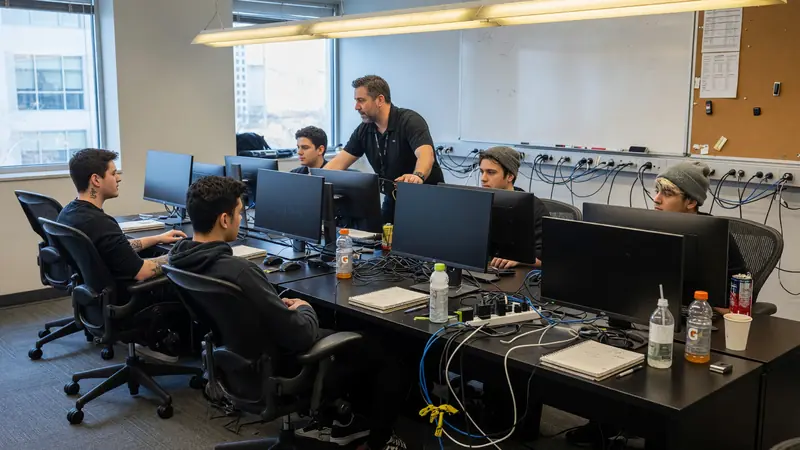
Practice rooms reveal discipline: cable management is not meta, but punctual VOD reviews are. Public bootcamp clips are marketing; repeated structural mistakes on LAN are evidence.
Look for whether teams film full scrims, rotate analyst notes, and protect sleep before early blocks.
Travel and bootcamp logistics
Detail from the Podium desk.
- Note time-zone delta for imported players.
- Check whether the org historically starts slow on day one.
- Separate jet-lag narratives from permanent skill issues after week one.
International rosters carry timezone tax. A talented quintet can look lost if bootcamp length is too short for call language to stabilize.
Fans overrate airport photos and underrate practice server quality on-site.
Org stability vs superteam risk
Neither model is morally better. Your job as a reader is to match the model to the tournament format in front of you.
Stable core
- Clear hierarchy
- Slower ceiling, higher floor
- Easier scouting continuity
Superteam stack
- Highlight potential
- Role overlap fights
- Needs elite coaching glue
Linking teams to players
System failure
Defaults collapse even when aim is fine.
Star failure
One role underperforms inside a sound system.
Hybrid
Both — require separate notes, not one angry sentence.
Every identity panel should deep-link to role frames on the players hub. Conversely, player pages should point back to system context so you do not scape-goat a single name for a structural failure.
Chemistry debt after mega swaps
Every simultaneous multi-role swap creates chemistry debt. The debt is paid in missed trades, late rotates, and awkward timeout silence. Fans who expect instant superteam gravity usually mis-time their optimism by weeks.
Stable cores compound small advantages: shared vocabulary, trusted peeks, and faster mid-round repairs. That does not make them morally better — it makes them different instruments for different formats.
Org staff quality is underrated in public discourse. An elite manager who protects practice blocks can outperform a louder brand with chaotic travel.
Debt signals
Timeout confusion, repeated default breaks.
Surplus signals
Silent executes, fast mid-map repairs.
Neutral noise
Airport photos and merch drops.
Extended desk notes for careful readers
Extended desk notes for /teams/ — written so the page remains useful after a single visit and still makes sense next month.
Competitive scenes reward readers who separate signal from costume. Jerseys, walkout songs, and LED walls are real, but they are not the decision tree that decides a map. When your notes drift into fashion critique, pull them back to roles, formats, and evidence ranks.
A durable habit is to end every session with a single transferable sentence. If you cannot export a lesson beyond tonight's cast, you consumed content without building literacy. Transferable sentences compound; disposable hot takes evaporate by morning.
Podium pages intentionally repeat the confidence-label idea because fans forget it under adrenaline. High, medium, and low are not bureaucratic stickers — they are brakes. Use them in private notes even if you never publish a word.
Internal links on this site are routes to jobs, not SEO ornaments. Open tournaments when the ladder confuses you, matches when series craft is the bottleneck, teams when an org looks chaotic, players when a role is miscast, games when the patch conversation is louder than the tape, guides when your desktop is the actual problem.
Responsible entertainment is part of competitive culture, not an appendix. If optional prediction products exist in your jurisdiction, they still lose to rent, sleep, and relationships. A desk that pretends otherwise is selling you a fantasy different from fantasy sports — and just as careless.
When organizers change a rule mid-season, screenshot the post and date it in your notebook. Memory edits itself to fit narratives. Primary text does not. That single habit will save you from confident wrong arguments in community threads.
Broadcast talent can be brilliant and still be wrong about a rumor. Treat color commentary as hypothesis generation. Your job is to tag hypotheses, not to baptize them as facts because the voice is charismatic.
If you only stalk one region, occasionally sample another region's broadcast language. You will notice different pacing norms and different respect for mid-round silence. Comparative watching builds taste faster than doubling down on a single bubble.
Signal
Formats, roles, sources, limits.
Noise
Unsourced graphics, guaranteed locks, pile-on chat.
Practice
One lesson logged before you close the laptop.
Care
Time-box, 18+, jurisdiction checks on money-adjacent steps.
FAQ
Questions desks get every week
Straight answers for fans building better watch habits — not hype copy.
What is the Podium teams desk for?
It explains durable teams literacy so you can follow broadcasts with better questions — not fabricated live stats.
Do you list live scores here?
No. Live numbers change too fast for a static desk page. We teach what to watch and how to verify.
How is this different from social clips?
Clips show outcomes. We focus on formats, roles, and evidence habits that still matter next month.
Can beginners use this page?
Yes. Start with the first two sections, then follow internal links to matches and guides.
Do you cover every region equally?
We use region-agnostic frames and call out when travel, ping, or LAN practice changes the read.
Where should I go after reading?
Use the related routes block — usually matches, teams, or guides depending on your goal.
Is wagering required to use Podium?
No. Competitive literacy stands alone. Any play route is optional, 18+, and jurisdiction-dependent.
How do you avoid rumor amplification?
Confidence labels, primary-source preference, and refusal to invent rosters or patch IDs.
Can I cite Podium in a community post?
Yes — link the specific section and keep our caveats intact.
Ready for the official play route?
When you want the sponsored prediction desk, use the first-party path. Editorial pages stay focused on competitive literacy.
Sponsored route · 18+ · Never chase losses · Podium does not invent bonuses, wallets, or legal status.